

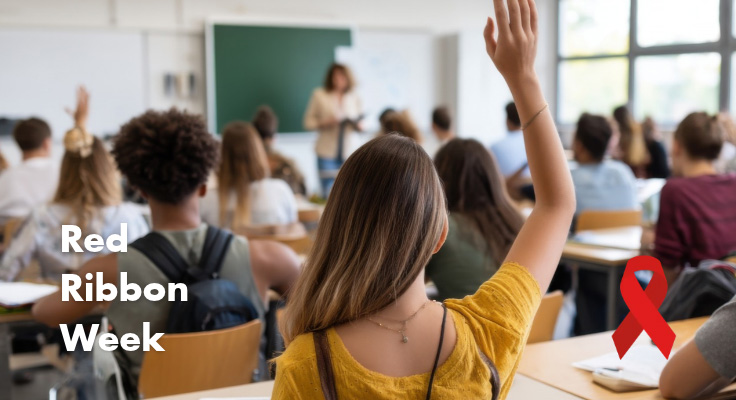
If you went to school in North America, there’s a good chance you wore a red ribbon at some point. Maybe you signed a pledge in a school gym or got a red wristband on the way out of class. You likely understood the message, but not the story behind the movement.
It started in a small border town in California’s Imperial Valley, with one family’s loss and a town that refused to let it be forgotten. This year, Red Ribbon Week runs October 23–31 and is primarily recognized within public schools. Here’s the story behind the ribbon, what this year’s theme asks of students, and why we think naloxone should be a part of the conversation.
Where The Red Ribbon Comes From
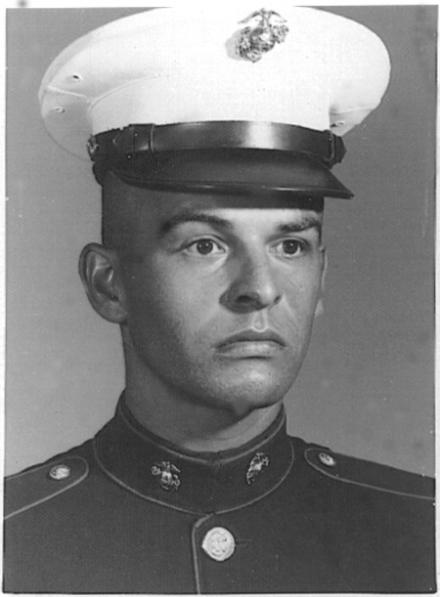
Enrique “Kiki” Camarena was born in Mexicali in 1947 and grew up across the border in Calexico, California. He graduated from Calexico High School in 1966, served in the Marine Corps, and returned home to work as a firefighter, a police officer, and a sheriff’s deputy.
He joined the Drug Enforcement Administration (DEA) in 1974. His first assignment was back home in Calexico. Later, he was sent to Guadalajara, Mexico, where he spent more than four years tracking some of the country’s largest drug-trafficking operations.
On February 7, 1985, he was kidnapped by the traffickers he was investigating. His body was found a month later.
His hometown answered with red ribbons. Friends and neighbors formed “Camarena Clubs,” and students at his former high school started the first one on April 20, 1985. Hundreds of members wore red ribbons and pledged their lives to live drug-free in Camarena’s honor.
The idea spread across California, then to parent groups in Illinois and Virginia. In 1988, the National Family Partnership established the first National Red Ribbon Week, and it has been held every year since.
Camarena is often remembered for something he told his mother when she tried to talk him out of joining the DEA: “Even if I’m only one person, I can make a difference.”1
This Year’s Theme: “Make a Difference. Be a Hero. Stay Drug Free.”
Every year, a student is chosen to create the Red Ribbon Week theme. This year’s theme is from Ava Tackett, a student at Griswold Middle School in Connecticut: “Make a Difference. Be a Hero. Stay Drug Free.”
Asked what inspired it, Ava put it simply: being drug-free means “making an impact on others.”2
The real heroes in our lives aren’t always famous. They’re the ones who commit to a drug-free life, and the friends courageous enough to speak up when something feels wrong. Sometimes the bravest thing you can do is make the choice that keeps you, and the people around you, safe.
Forty-one years apart, a middle schooler in Connecticut and a DEA agent from Calexico landed on the same idea: one person can make a difference.
And being a hero can be as simple as recognizing what an overdose looks like and knowing exactly where naloxone is.
Why Prevention Needs a Second Layer
Prevention education is about making informed choices. Today, fentanyl has added a new challenge: the danger isn’t always obvious.
The California Department of Public Health (CDPH) warns that any pill that does not come from a health care provider or pharmacist can contain fentanyl, no matter its color, shape, or size. A counterfeit pill can look identical to a real pill.3
That’s a gap prevention education alone cannot close. The young person who needs help may never have made the choice we warn them about. They may have thought they were taking something else or come into contact with fentanyl without even realizing it.
Overdose deaths are declining, and that progress is worth celebrating. It is also exactly when attention tends to fade. The red ribbon goes up every October because the work of prevention and preparedness is never done.4
Where The Gaps Usually Are
When an overdose happens at school, at a game, or at a dance, the first person on the scene may not be a nurse or a paramedic. It could be a coach, a teacher, a custodian, or a classmate.
What stands between that person and the ability to save a life comes down to three things:
- Recognizing the signs.
- Knowing what to do.
- Having naloxone within reach.
You can teach, practice, and prepare for each of these. None of them can wait. An overdose can slow or stop breathing, cutting off oxygen to the brain.5 In those critical minutes, the difference isn’t whether a school owns naloxone. It’s whether someone can reach it quickly enough to use it.
Prevention And Preparedness Are Not Opposites
Schools are no strangers to preparedness. They teach heart health and keep AEDs in their gym. They teach fire safety, mount extinguishers in the hallway, and conduct regular drills. No one argues that having an extinguisher undermines the lesson.
Naloxone follows the logic for a different emergency. It’s a nasal spray that can reverse an opioid overdose; it is sold over the counter, and anyone can carry it. According to CDPH, there are no age restrictions on naloxone, it is not a narcotic, and it will not harm someone who is not overdosing on an opioid.6
Red Ribbon Week encourages students to make healthy choices. Our job as adults is to make sure one bad day, or one counterfeit pill, or one unexpected exposure does not have to be the end of the story.
What California Schools Already Have in Their Corner
California has already laid much of the groundwork. State law requires schools to include opioid overdose response protocols in their safety plans, and schools can also request free naloxone through the Department of Health Care Services’ Naloxone Distribution Project.7
This school year, prevention education took another step forward. A 2024 state law now requires high schools with health classes to teach students about the dangers of fentanyl.8
In Riverside County, schools got a head start. The Riverside County Office of Education built a Fentanyl Awareness Curriculum alongside the county’s Faces of Fentanyl campaign, drawing on local data and guidance from public health and law enforcement experts.9 The curriculum was piloted in three schools in spring 2025, opened to every district in the county that fall, and remains available free of charge to any school district that requests it.
For most California middle and high schools, the question is no longer whether you have naloxone. It’s whether you can reach it when seconds count.
Five Things To Do This Red Ribbon Week
- Find your naloxone. Check your own building or campus. Then ask whether someone could reach it quickly during an evening game, a PTA meeting, or a weekend event.
- Teach the signs. Slowed or stopped breathing. Blue or gray lips or fingertips (on darker skin, check lips, gums, and nails). No response to voice or touch. Pinpoint pupils. Gurgling, gasping, or snore-like sounds.10
- Point people to trusted resources. CDPH publishes written and video instructions for recognizing and responding to an overdose. Share them with staff and families.
- Put it in the plan. Treat naloxone like an AED: incorporate it into your safety plan, staff training, and emergency response drills.
- Make it easy to find. Add your campus to a public naloxone map so students, families, and community members can locate it quickly in an emergency.
One Person Can Make a Difference
Forty-one years ago, a small town in the Imperial Valley responded to a loss with red ribbons and a promise. Four decades later, that promise still calls each of us to act.
Wear red. Learn the signs. And this Red Ribbon Week, help make naloxone accessible and ready when it’s needed most.
Is Your Campus Ready?
ODRescue™ puts naloxone on the wall, next to the AED, so it is easier to reach in an emergency.
See how it works for schools →
Looking for naloxone near you? Our free Locate Naloxone Now interactive map shows where to find it.
Find Naloxone Near You →
Disclaimer: Red Ribbon Week® and the annual Red Ribbon Week theme are trademarks of the National Family Partnership. ODRescue™ is not affiliated with, sponsored by, or endorsed by the National Family Partnership, the U.S. Drug Enforcement Administration, or any government agency. References to Red Ribbon Week, the 2026 theme, and public figures are provided for informational and educational purposes only.
Sources
- Red Ribbon Week: History | DEA Museum Online Exhibit
- 2026 Red Ribbon Week Theme: “Make A Difference. Be A Hero. Stay Drug Free.” | National Family Partnership
- Fentanyl | Overdose Prevention | CDC (updated June 9, 2025)
- U.S. Overdose Deaths Decrease for Third Consecutive Year in 2025 | CDC NCHS Press Release, May 13, 2026
- Overview of Respiratory Arrest | Merck Manual Professional Edition (updated June 2026)
- Naloxone and Youth | California Department of Public Health
- Naloxone Distribution Project | California Department of Health Care Services
- AB 2429: Pupil Instruction: Health Education Courses: Fentanyl | CalMatters Digital Democracy
- New Faces of Fentanyl Curriculum Warns Riverside County Students of Deadly Drug During Health Class | County of Riverside, August 2026
- Training Resources | ODRescue™